Materials & Sleep
What South American Horsetail Adds to a Vispring Sleep Surface
In a carefully layered mattress, a small amount of a springy natural fiber can help shape the feel of the whole surface. Vispring’s use of hand-teased South American horsetail alongside Shetland wool offers a useful case study in how materials with different qualities can work together—and why the construction around them matters as much as the names on a specification sheet.
Published October 31, 2026
Horsehair is one of those materials whose usefulness is easier to understand by handling it than by reading its name. A strand bends, resists, and returns toward its original shape. In upholstery and bedding, that resilience has made horsehair a traditional filling: it can help a padded layer keep its loft rather than flattening immediately under repeated pressure. In contemporary mattresses, the material is not a substitute for the spring system or the full upholstery assembly. It is one element in a larger design.
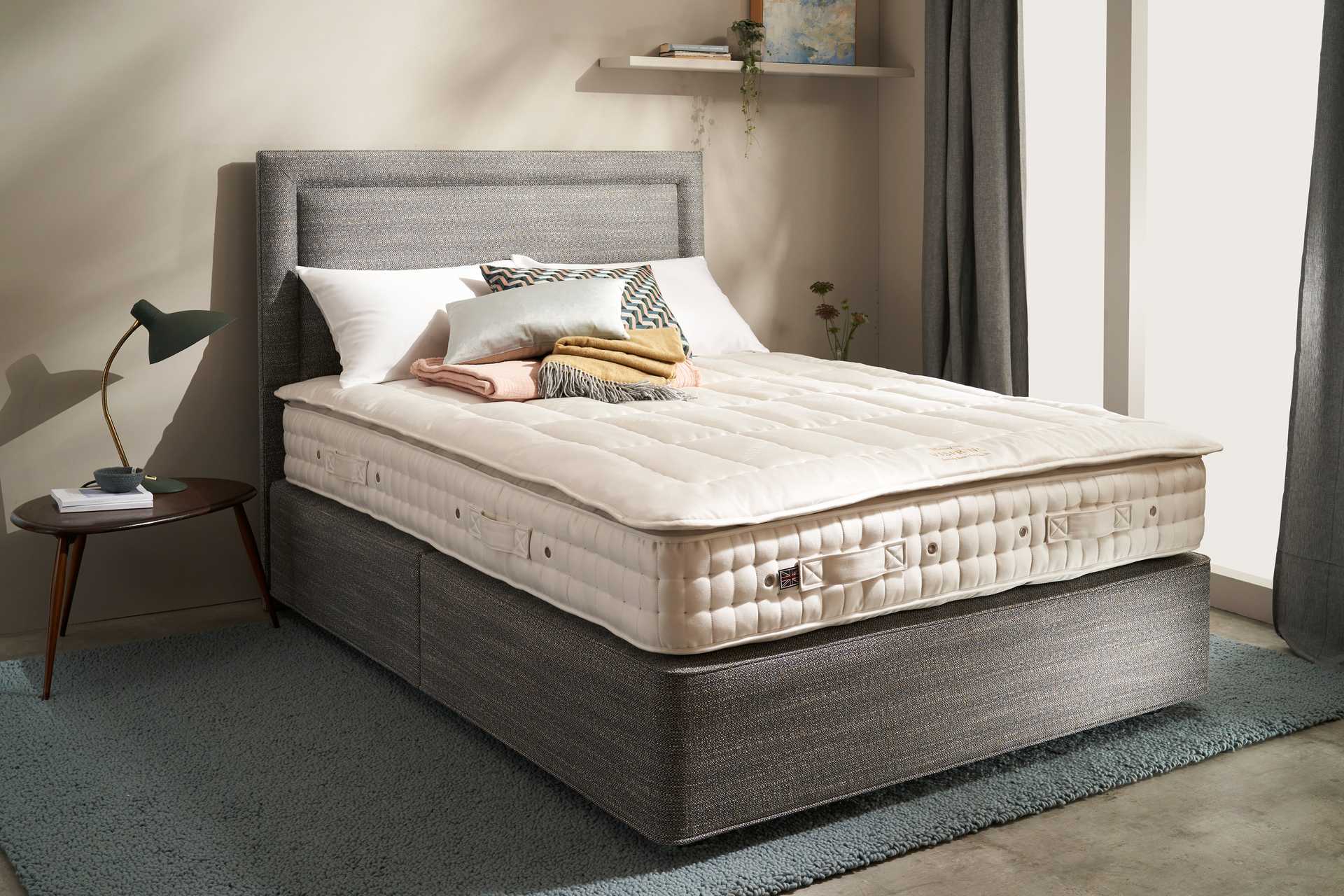
Vispring’s Tiara Superb illustrates this layered approach. Its construction includes hand-teased South American horsetail blended with Real Shetland Wool in a middle upholstery layer, with blended Shetland wool and organic cotton at the outer layers. Below the fillings is a two-layer, hand-nested calico pocket-spring system. Each component has a different role: the springs respond to the body’s load, while the upholstery materials shape the surface feel, manage contact with the sleeper, and contribute to the way the bed responds over time.
The distinction matters. Horsetail may contribute resilience and a more open structure within the upholstery, but it does not independently determine whether a mattress is supportive, comfortable, or right for a particular sleeper. Those outcomes depend on the complete mattress, its spring system, the arrangement and quantity of the fillings, and the person using it.
First, what does “horsetail” mean here?
In a bedding description, “horsetail” refers to horsehair, particularly hair from the tail. The word can be confusing because horsetail is also the common name for a plant. The plant and the animal fiber are not the same material. In the context of Vispring’s mattress construction, South American horsetail means an animal-derived textile fiber, not a botanical ingredient.
Horsehair has a long history in upholstery and other crafts because of its distinctive physical behavior. Its individual fibers are relatively stiff and resilient compared with softer filling fibers. When arranged in a loose, springy mass, they can create space within a padded layer and resist becoming completely compacted. These qualities help explain why horsehair appeared in traditional upholstery and why it continues to interest makers of natural-material bedding.
“Hand-teased” describes preparation: fibers are loosened and separated so they can be incorporated into a filling rather than remaining tightly bundled. It is a useful construction detail, but it should not be read as a promise that every strand behaves identically or that the finished mattress will feel the same for every person. Natural fibers vary, and their performance is affected by how they are processed, blended, layered, and secured.
Nor does the word “natural” settle every practical question. A shopper may also want to understand sourcing, animal-welfare standards, processing, certifications, care requirements, and the manufacturer’s warranty. These are separate considerations, and they should be checked against current product documentation rather than inferred from a fiber name alone.
Resilience: the case for a springy fiber
A mattress filling is compressed every night. The body presses into the surface, pressure shifts as a sleeper turns, and the filling experiences thousands of cycles over years of use. A material’s ability to recover after compression is therefore central to how it contributes to a sleep surface. Horsehair’s reputation rests in part on its springy character: it can help a filling retain loft and avoid the immediate, dense feel associated with materials that pack down more readily.
That does not mean horsehair cannot compress, or that a mattress containing it is immune to wear. Every mattress changes with use. The practical question is how a particular fiber behaves as part of a particular construction. In the Tiara Superb, horsetail is blended with Shetland wool rather than used as an isolated, stand-alone layer. The blend joins a more resilient fiber with wool’s softer, more yielding character, producing a composite upholstery layer rather than a single-material surface.
For sleepers, the effect is not usually experienced as “feeling the horsehair.” Instead, materials contribute indirectly to a surface’s balance: how readily it gives beneath the shoulders and hips, how quickly it recovers as a sleeper moves, and how the upholstery interacts with the support beneath it. These impressions are subjective, and two people can describe the same mattress differently depending on body shape, weight, sleeping position, sensitivity to firmness, and expectations.
The mattress’s spring system remains essential. The Tiara Superb’s individually pocketed springs respond locally to pressure, while the upholstery above them moderates the contact between the body and the spring unit. A resilient filling cannot correct an unsuitable or worn-out mattress beneath it, just as a soft surface layer cannot make a mattress’s support system fit every body.
What wool contributes to the blend
Wool has a different feel and function from horsetail. It is pliable, soft, and able to take up and release moisture vapor, which can help moderate the immediate microclimate around the sleeper. In Vispring’s described construction, Shetland wool appears both in the outer upholstery layers and blended with the South American horsetail in the middle. That placement gives wool a role close to the body as well as within the more resilient filling layer.
The contrast is useful to keep in mind. Horsetail is associated with spring and loft; wool adds a softer, more yielding component and can help manage moisture and temperature at the surface. These are broad material characteristics, not guarantees of a particular night’s comfort. Room temperature, bedding, sleepwear, the mattress protector, and individual differences all shape how warm or cool a bed feels.
Blending also changes the behavior of the ingredients. A wool-and-horsetail layer is not simply “horsehair plus wool” in two separate compartments. How the fibers are teased, mixed, distributed, and held in place affects the finished upholstery. Tufting and stitching elsewhere in a mattress can help keep layers from shifting, while the border and spring construction influence edge stability and the overall feel of the bed. Material names give a starting point; construction details fill in the picture.
For this reason, comparisons between natural mattress materials should be specific. Wool, latex, cotton, and horsehair do not perform as interchangeable labels. Wool may be chosen for softness and moisture management; latex is commonly valued for responsive contouring; horsehair is associated with resilience and loft. The way each material is used—its thickness, density, position, and relationship to other layers—can matter just as much as its general properties.
Airflow is a construction question, too
Horsetail’s structure is often discussed in connection with airflow. A filling that holds some space between fibers can support air movement through the upholstery, rather than forming a uniformly dense mass. In principle, a more open filling can contribute to a less close, less compact feel. The exact result, however, depends on the design of the whole mattress. Fiber preparation, blending, layer thickness, quilting, ticking, and the sleeper’s bedding all affect what happens to heat and moisture.
It is tempting to translate “breathable” into a simple promise of sleeping cool. That is too neat. A mattress does not ventilate independently of the room, and no single fiber can guarantee a cool night. A wool-rich surface may feel comfortable to one person and warm to another. A protector or tightly fitted sheet can also change how readily air and moisture move at the surface.
In the Tiara Superb, the outer ticking is described as a wool-and-viscose fabric, while wool and cotton form outer upholstery layers and the horsetail-and-wool blend sits between them. Taken together, those choices show how manufacturers can approach temperature and moisture management through several layers, not just one headline ingredient. The construction is a system, and its effect is cumulative.
A mattress and a topper solve different problems
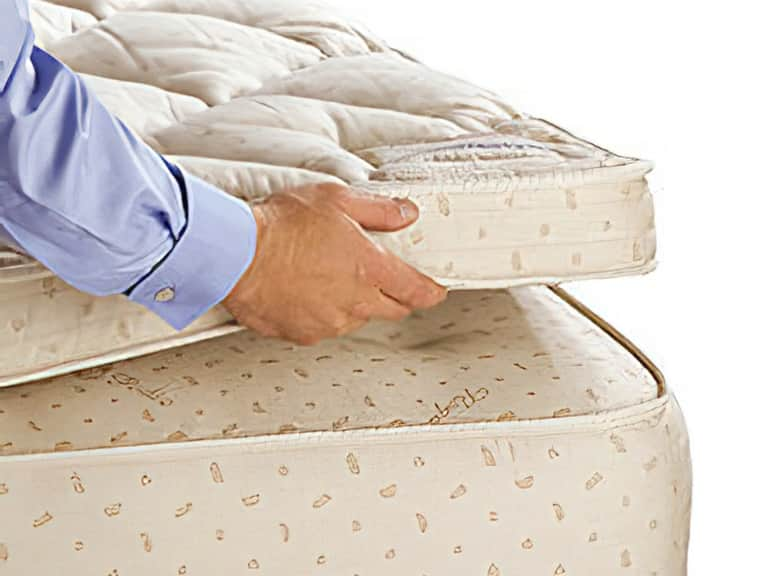
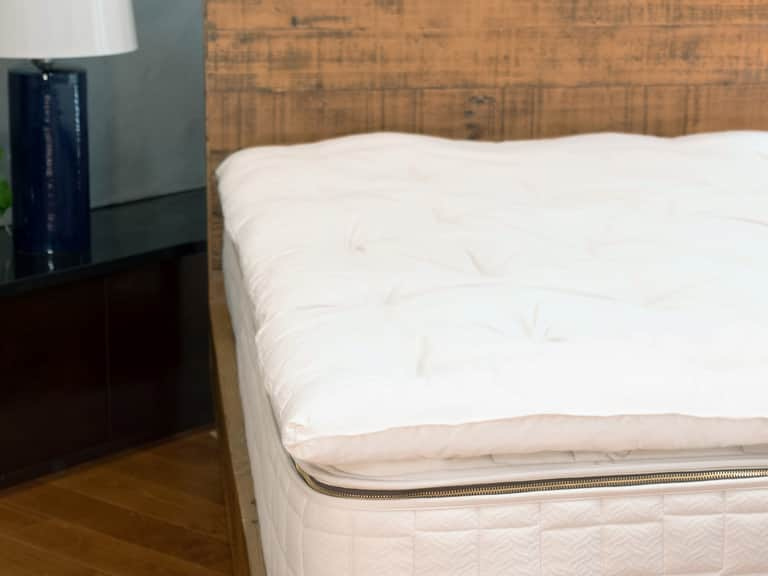
A mattress topper adds a layer above an existing mattress. Its most direct job is to change the feel at the surface: it might make a bed feel plusher, add cushioning, or alter how pressure is distributed. A topper does not replace the mattress’s core support, repair a sagging foundation, or restore a spring unit that has lost its integrity. That boundary is important when considering any natural-material topper, whether it contains wool, latex, or another filling.
Horsehair bedding and mattress toppers are sometimes discussed together because both draw on natural fibers and upholstery traditions. But a consumer should not assume that a mattress containing horsetail has a matching horsehair topper, or that a topper’s material composition can be inferred from a brand’s mattress range. Confirm the actual specifications for the exact model and size under consideration.
Before selecting a topper, begin with the mattress beneath it. If the mattress is structurally sound but feels too firm at the shoulders or hips, an additional cushioning layer may help. If the bed has a visible dip, uneven support, or a damaged foundation, adding a topper may disguise the symptom without addressing the cause. A topper can refine a surface; it cannot reliably correct a support problem.
Also consider total bed height and bedding fit. A substantial topper can make a mattress-plus-topper combination taller, affecting fitted sheets, bed rails, and ease of getting into bed. The topper’s attachment method matters as well: straps, a fitted skirt, or simple weight and bedding may hold it differently. Check dimensions, care instructions, and warranty terms before making a choice.
How to assess a natural-material sleep surface
Specifications are most useful when they answer practical questions. Instead of relying on broad claims such as “luxurious,” “cooling,” or “supportive,” look for the materials and their placement, the overall construction, and clear instructions for use. If an important detail is missing, ask the manufacturer or retailer rather than filling the gap with assumptions.
- Identify the fiber precisely. Confirm whether “horsetail” means horsehair, and establish which part of the construction contains it.
- Check the blend and layer order. A fiber’s role depends on what it is combined with and where it sits relative to the body and support system.
- Understand the support beneath the upholstery. Springs, latex cores, and other support systems influence alignment and pressure distribution in ways a surface filling cannot replicate.
- Match the feel to your sleep position. Side sleepers often notice pressure at the shoulders and hips; back and stomach sleepers may prioritize different levels of surface softness and support.
- Ask about sourcing and care. For animal-derived materials, sourcing and animal-welfare information may be relevant. Natural fillings can also have specific cleaning and maintenance requirements.
- Read the warranty and trial terms. Confirm what is covered, how the product must be used, and whether return or exchange options apply.
When possible, test a mattress for long enough to notice more than its first impression. A quick sit on the edge or a few minutes lying down may reveal broad preferences, but not how the surface feels through a full night. Pay attention to whether the shoulders and hips feel comfortable, whether movement is easy, and whether the mattress maintains a feeling of even support. For a topper, test it on the mattress it will actually be used with.
Care, longevity, and realistic expectations
Natural fibers are not maintenance-free simply because they are traditional. Care instructions vary by product, and a mattress or topper should be cleaned according to its manufacturer’s guidance. Many layered products are not designed for machine washing. Moisture can damage internal materials or make thorough drying difficult, so a protector is often a sensible way to reduce exposure to spills and perspiration.
Rotation may help distribute wear when the manufacturer permits it, but not every mattress is designed to be flipped. Check whether the model is one-sided or two-sided before turning it over. Avoid assuming that sunlight, direct heat, or aggressive cleaning is appropriate; these can affect covers and fillings. Product-specific directions take precedence over general advice.
Durability is influenced by more than the material’s reputation. The quality and arrangement of the fibers, the mattress’s construction, the base beneath it, how often it is used, and how it is cared for all contribute. Horsehair’s resilience is a reason it has endured as an upholstery material, not a guarantee that a particular mattress will last indefinitely or remain unchanged.
The larger lesson in Vispring’s construction
South American horsetail in the Tiara Superb is best understood as one part of an intentionally layered sleep surface. Its resilient character complements Shetland wool; the wool contributes softness and moisture management; the outer ticking and upholstery shape the immediate feel; and the pocket springs provide the underlying response to pressure. None of those elements alone explains the mattress.
That is the more useful way to think about natural mattress materials. A material can have recognizable strengths without being a universal solution. Horsetail may bring loft and recovery to an upholstery blend, but comfort depends on the person and the complete construction. Wool may help moderate moisture, but it cannot promise a particular sleep temperature. A topper may adjust the feel of a sound mattress, but it cannot replace the support underneath.
For shoppers drawn to horsehair bedding, the right questions are therefore concrete: Where is the fiber used? What is it blended with? How is the mattress supported? What does the manufacturer say about care, sourcing, and warranty? Answers to those questions reveal more than a material name can. In a well-made sleep surface, the story is not just in the fiber. It is in how the layers work together, night after night.
Frequently asked questions
Is South American horsetail the same as plant horsetail?
No. In bedding specifications, horsetail refers to horsehair, an animal-derived fiber. It is not the horsetail plant.
What does horsehair add to a mattress?
Horsehair is valued in upholstery for resilience and the ability to help a filling retain loft. In the Tiara Superb, it is hand-teased and blended with Shetland wool within a larger, layered construction.
Does horsehair make a mattress cool?
No single material can guarantee that a mattress will feel cool. Horsetail’s open, resilient character may contribute to the behavior of the filling, while the full construction, bedding, room conditions, and individual preferences all affect temperature comfort.
Can a topper fix an uncomfortable or sagging mattress?
A topper may change surface softness and cushioning, but it does not replace the support system beneath it. A sagging or damaged mattress may need repair or replacement rather than an additional layer.