Materials & Mattress Comfort
How Horsehair, Wool, and Latex Shape Mattress Comfort
A mattress is more than a spring system under a layer of fabric. The materials closest to the sleeper—and the way they are arranged—help determine whether a bed feels buoyant or yielding, cool or insulated, softly cushioned or immediately responsive. Horsehair, wool, and latex each bring a different character to that equation.
Natural materials are often discussed as if they were interchangeable badges of quality. They are not. Horsehair, wool, and latex behave differently under pressure, move moisture and heat in different ways, and recover from compression at different rates. Their effects depend not only on the material itself but also on its thickness, processing, position in the mattress, and relationship to the layers around it.
That distinction matters whether you are comparing a complete mattress or deciding whether a topper can improve the bed you already own. A horsehair mattress layer may contribute spring and airflow. Wool tends to soften the surface while helping manage moisture. Latex can contour around the body and rebound quickly when pressure shifts. In a well-designed mattress, those characteristics can complement one another rather than compete.
There is no universal “best” natural mattress material. The useful question is more personal: What does your current sleep surface need? A little more cushioning? Less heat buildup? A quicker response when you change position? Understanding how materials work is a better starting point than relying on a label or a broad promise about better sleep.
Horsehair: resilient, springy, and open to airflow
In mattress construction, the term horsehair commonly refers to processed hair from the horse’s tail, sometimes described as horsetail. Its distinctive contribution is resilience. The fibers can be formed into a springy layer that compresses under weight and then recovers, giving the surface a buoyant quality rather than the slower, enveloping feel associated with some cushioning materials.
The structure of the fiber also helps create space within the upholstery. Air can circulate through that structure, which may help a mattress release warmth and moisture rather than trapping them in a dense, compact layer. This does not mean that a horsehair mattress will feel cool in every room or for every sleeper. Room temperature, bedding, mattress cover, body heat, and the construction of the full bed all affect the experience. But the material’s open, resilient character is one reason it appears in traditional high-end mattress upholstery.
Springiness is not the same as softness. A mattress containing horsehair may feel lively or gently yielding, but the sensation depends on what lies above and below it. A thin layer beneath wool and a cover may provide subtle lift; a thicker or differently arranged layer may have a more noticeable effect. Horsehair is not a substitute for the mattress’s spring system, nor does its presence alone establish how firm or supportive a mattress will feel.
Another point worth noting: mattress horsehair is not the same thing as an entire mattress being made from hair. It is one component in a layered construction. In many designs, it works alongside wool, cotton, springs, or other upholstery materials. Those surrounding layers shape how directly the sleeper feels its resilience and how the mattress responds over time.
Wool: cushioning and moisture management
Wool brings a different kind of comfort. Its fibers can form a soft, insulating layer that cushions the body while helping manage moisture near the sleep surface. The result is often a more buffered feel than a bare, firm mattress: less abrupt at first contact, but not necessarily deeply conforming.
Wool’s relationship with temperature is sometimes oversimplified. It is often called temperature-regulating, a phrase that can sound like a guarantee of coolness. A more useful description is that wool can help moderate the sleep microclimate by absorbing and releasing moisture and by providing insulation. Whether a particular wool layer feels comfortably warm, too warm, or well balanced depends on its density and thickness, the cover fabric, the room, and the sleeper.
In mattress upholstery, wool can also contribute a gentle, natural loft. Over time, however, all cushioning materials may settle or compress to some degree. The way wool is layered, quilted, and secured influences how evenly it wears. Care matters, too: many natural-material toppers are intended for spot cleaning and airing, not machine washing. Following the maker’s care instructions helps avoid damaging the fibers or the construction.
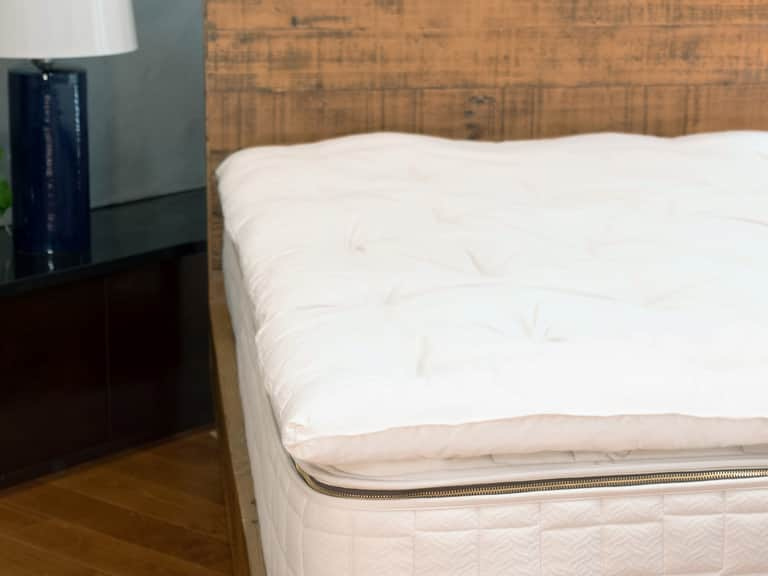
For people who want to soften a firm mattress without adding a pronounced, slow-sinking sensation, a wool topper may be worth considering. The Naturepedic Wooly Mattress Topper is a 3-inch wool layer with an organic cotton sateen cover. Its construction is intended to add cushioning and moisture management, and its product information specifies spot cleaning and regular turning or rotation. As with any topper, the feel it creates will depend on the mattress beneath it.
Wool also appears in combination with other materials. In these designs, it may provide the surface cushioning and moisture-handling layer while latex supplies more direct contouring or recovery. The blend can produce a different sensation from either material used alone, so it is useful to look at the actual layer sequence rather than judging a product by its headline material.
Latex: contouring with a quick rebound
Latex is valued for its combination of conformance and resilience. It can compress beneath heavier parts of the body, helping distribute pressure, then return toward its original shape when the sleeper moves. Many people describe that as responsive or buoyant: the material adapts without the same gradual, deeply sinking sensation associated with some foams.
How much contouring a latex mattress layer provides depends on more than the word “latex.” Thickness, firmness, density, processing method, and the cover all influence feel. A thinner layer can make a surface more forgiving without dramatically changing the bed’s character. A thicker, softer layer may create more pronounced cushioning. Firmness labels are not perfectly consistent across manufacturers, so, when possible, consider testing the specific construction rather than treating a number as a universal standard.
Latex may suit sleepers who want a surface that responds promptly as they shift position. Its rebound can make movement feel easier than on a layer that slowly conforms and recovers. But latex is not automatically right for every sleeper. Someone seeking a deeply plush, enveloping feel may prefer a different material or a softer, thicker configuration. People who are sensitive to the feel of latex should also check the product’s composition, cover, and any relevant care or material disclosures.
A latex topper can be a practical way to alter the feel of a mattress without replacing it. It will not, however, repair a mattress with a broken support core, a pronounced permanent dip, or a failing foundation. A topper changes the comfort layer; it cannot reliably correct structural problems beneath it. Before adding one, inspect the mattress and bed base and consider whether the existing surface is still providing even support.
What the combination can do
In a layered mattress, materials operate as a small system. Wool may cushion the surface and manage moisture; horsehair may add a resilient, breathable upholstery layer; latex may provide contouring and rebound. Their order matters. A soft layer placed close to the body can define the first impression, while a firmer or springier material deeper in the upholstery may influence how the bed pushes back.
Consider a mattress that uses wool near the cover and horsehair beneath it. The first contact may feel softly buffered, while the deeper layer adds lift and helps the upholstery recover. Put latex into a comparable design and the body may feel more directly cradled, with a distinctly elastic response. These are tendencies, not guarantees. Thickness, density, quilting, spring tension, and the sleeper’s body all modify the result.
The Vispring Tiara Superb offers a useful example of layered natural upholstery. Its described construction includes wool and organic cotton at the outer upholstery layers, with hand-teased South American horsetail blended with Real Shetland Wool in the middle. Beneath those materials, the mattress uses a two-layer pocket-spring system. The example shows why a material should be understood in context: the feel is shaped by the full sequence of fibers, springs, cover, and construction, not by horsetail alone.
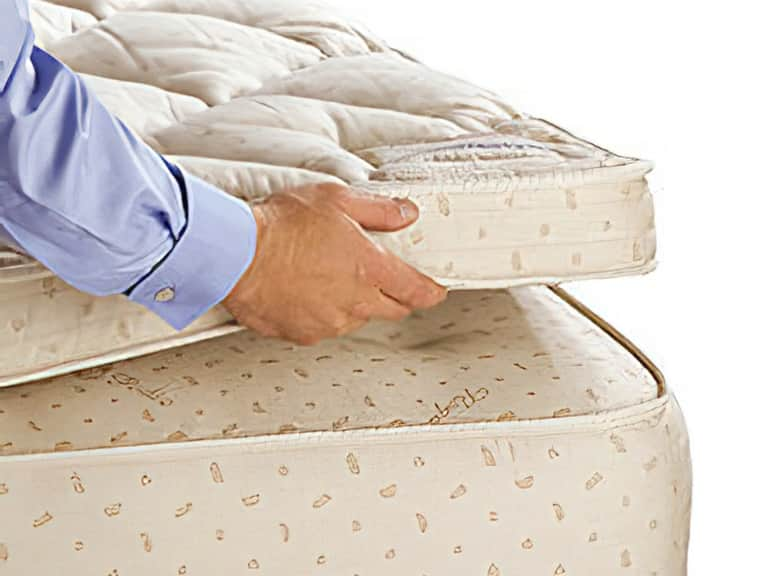
For a separate surface adjustment, the Royal-Pedic Premier Natural 3" Pillowtop Pad combines cushioning with French wool batting and a natural latex layer, according to its product description. A topper of this kind is not equivalent to a complete mattress with an integrated horsehair layer. It is an additional comfort component placed on top of an existing bed, and its effect will vary with the mattress it covers.
Firmness, pressure relief, and sleep position
Material names can narrow the choices, but body alignment and pressure relief are the practical tests. Side sleepers often need enough surface give around the shoulders and hips to reduce concentrated pressure. Back sleepers may prioritize even support with moderate cushioning. Stomach sleepers may be more comfortable on a surface that limits excessive sinking through the midsection. These are general patterns, not rules: body shape, weight, preference, and existing pain or sensitivity can change what feels supportive.
A soft topper can relieve pressure on a firm bed, but adding softness is not always the same as improving alignment. If the pelvis or shoulders sink too far, the surface may feel comfortable at first and less supportive over a full night. Conversely, a resilient layer that feels firm in a showroom may become more accommodating under a sleeper’s weight. If you are evaluating a mattress in person, spend enough time in your usual sleep position to notice whether pressure builds and whether changing position feels easy.
Think in terms of the mattress plus the sleeper, not the topper alone. A three-inch topper on a deeply cushioned mattress may create a very different result from the same topper on a firm, flat surface. The cover and fitted sheet can also affect the immediate feel, and a protector may slightly alter the way the materials respond. Make comparisons using the bedding you expect to use at home whenever possible.
Temperature comfort is a whole-bed question
Sleep temperature is influenced by more than the filling. The room, pajamas, duvet, sheets, humidity, mattress cover, and the sleeper’s own heat production all contribute. Breathable fibers may help the bed release warmth and moisture, but no natural material can control every part of that environment.
When comparing materials, ask what kind of temperature problem you are trying to solve. Do you feel warm because the mattress surface seems to hold heat? Do you wake damp? Is the room itself warm, or is a heavy duvet the likely cause? A breathable cover and lighter bedding may be more effective than changing the entire mattress. If you are choosing a topper, consider how much insulation it adds as well as what it is made from.
Horsehair’s open structure, wool’s moisture management, and latex’s particular construction may all contribute to the feel of a sleep surface. But “natural” is not a synonym for cool, and “breathable” does not mean temperature-neutral in every setting. Seek clear details about the full construction and, if possible, evaluate the bed under conditions close to your everyday routine.
How to compare a horsehair mattress topper or layer
The phrase “horsehair mattress topper” can refer to a standalone accessory, but horsehair is more commonly encountered as one element in a complete mattress’s upholstery. Before comparing options, establish whether you are looking at an integrated layer or a separate topper. The distinction affects how the material works with the mattress and how easy it is to adjust or maintain.
- Ask where the material sits. A layer close to the surface will be felt differently from one placed beneath wool or another upholstery layer.
- Look for thickness and composition. A material name without a description of the amount and arrangement tells only part of the story.
- Consider the existing mattress. A topper may change surface comfort, but it will not restore a sagging support core or fix an unstable foundation.
- Assess movement and pressure relief. Notice whether the bed cushions pressure points and still allows you to change position comfortably.
- Check care requirements. Natural toppers may require spot cleaning, protection, airing, or periodic rotation rather than laundering.
- Review the full material disclosure. Covers, batting, adhesives, and supporting layers are part of the construction, too.
For anyone comparing natural mattress materials, these questions are more revealing than a broad claim about luxury or wellness. Ask the retailer or manufacturer for a layer-by-layer description, the topper’s dimensions and attachment method, and the recommended care routine. If the bed has a trial or return policy, read its terms before purchase; comfort is individual, and a short showroom test cannot reproduce weeks of use at home.
Durability and maintenance
Resilience and durability are related, but they are not identical. A material may recover well after ordinary compression and still require careful handling. Mattress life depends on construction quality, use, support underneath, exposure to moisture, and how the surface is maintained. No fiber guarantees a fixed lifespan on its own.
Use a protector compatible with the topper and mattress, especially if the maker recommends one. Follow care instructions closely: products that specify spot cleaning should not be soaked or machine washed unless the instructions say otherwise. Regularly rotating a topper, where permitted, can distribute wear. Avoid direct heat or harsh cleaning methods when the manufacturer advises against them. These steps are straightforward, but they can matter more to longevity than a promise tied to a single material.
Natural materials also prompt questions about sourcing and certification. Terms such as organic, natural, and chemical-free can have specific meanings—or may be used broadly—so look for transparent disclosures and named standards where available. Certification can provide information about defined criteria, but it does not tell you whether a particular firmness or surface feel will suit you.
A practical way to choose
Start with the problem you want to solve. If a mattress feels too firm at the shoulders or hips, a cushioning layer may help. If it feels sluggish when you move, a more responsive construction may be worth testing. If warmth or dampness is the concern, consider the entire sleep setup—cover, bedding, room conditions, and layer arrangement—rather than assuming that one fiber will solve it.
Then decide how much change you want. A thinner topper may make a modest adjustment while preserving more of the mattress’s original support. A thicker one can produce a more obvious change, but may also affect the bed’s height, fitted-sheet fit, and overall feel. Measure the mattress and check the topper’s dimensions before ordering. If you share the bed, compare preferences together: one person’s ideal plushness may feel unstable to another.
Finally, judge the materials as a team. Horsehair offers a springy, air-permeable character; wool adds cushioning and helps manage moisture; latex brings contouring with a quicker rebound. Their placement and proportion determine whether those traits feel subtle or pronounced. A horsehair mattress layer is not automatically firmer, cooler, or longer-lasting than every alternative. It is one design choice among many.
The most comfortable bed is not necessarily the one with the longest list of natural fibers. It is the one whose complete construction suits the sleeper: supportive where the body needs support, yielding where pressure collects, and comfortable across the night. Understanding what horsehair, wool, and latex actually do makes that choice clearer—and turns material labels into useful information rather than promises.